
Keep fats, oils and grease out
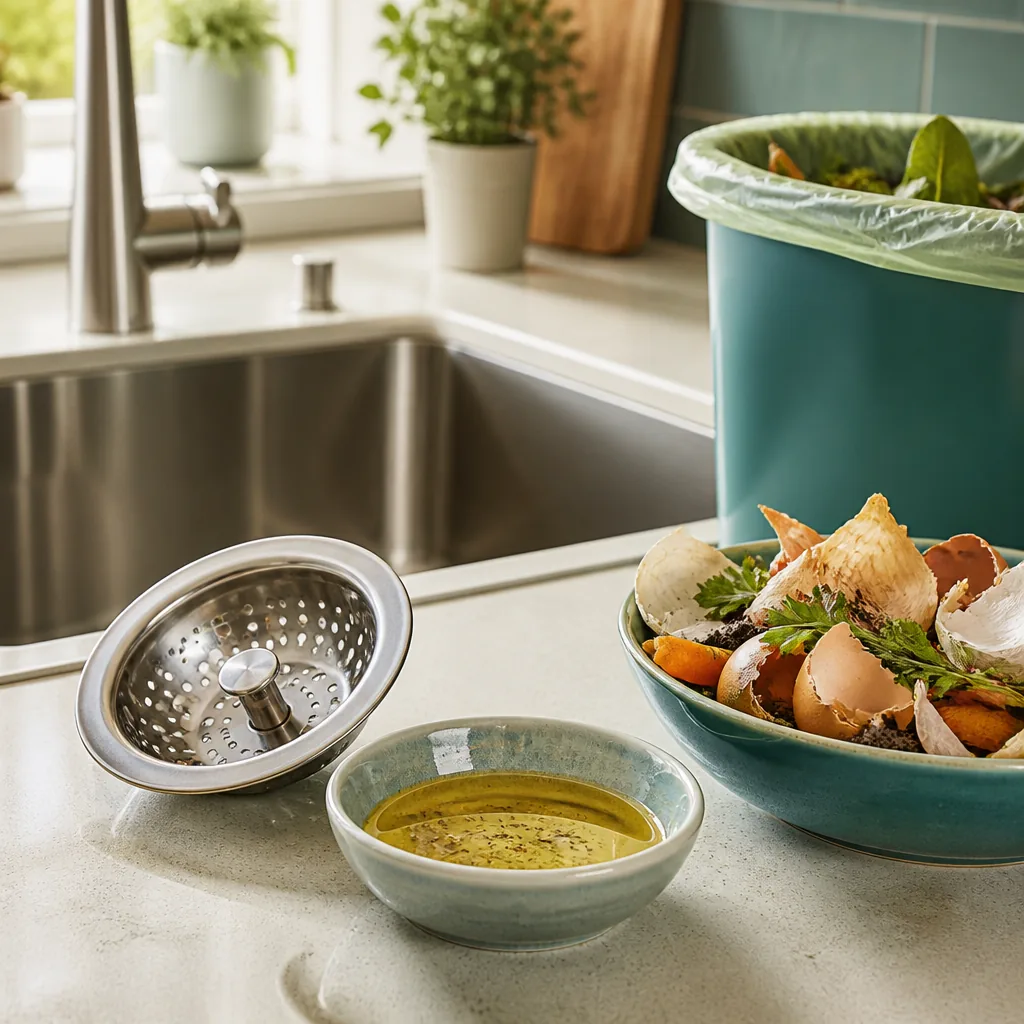
Cooking fats can cool and cling to drain surfaces. Let small amounts cool, then wipe or scrape them into household waste according to local disposal guidance instead of rinsing them down the sink.
A strainer catches larger scraps but does not capture oil or fine residue. Avoid relying on hot water or soap to carry grease away; that does not remove the material from the drainage system.
Be thoughtful with food scraps
Place coffee grounds, fibrous peels, starchy leftovers and large food scraps in the appropriate waste or organics stream rather than treating the sink as a bin. Small amounts can still combine with other material over time.
If a sink has a disposal unit, follow its manufacturer instructions and use it only for suitable items. Keep hands and tools out of the unit, and do not operate it when the fixture is blocked.
If the sink starts draining slowly
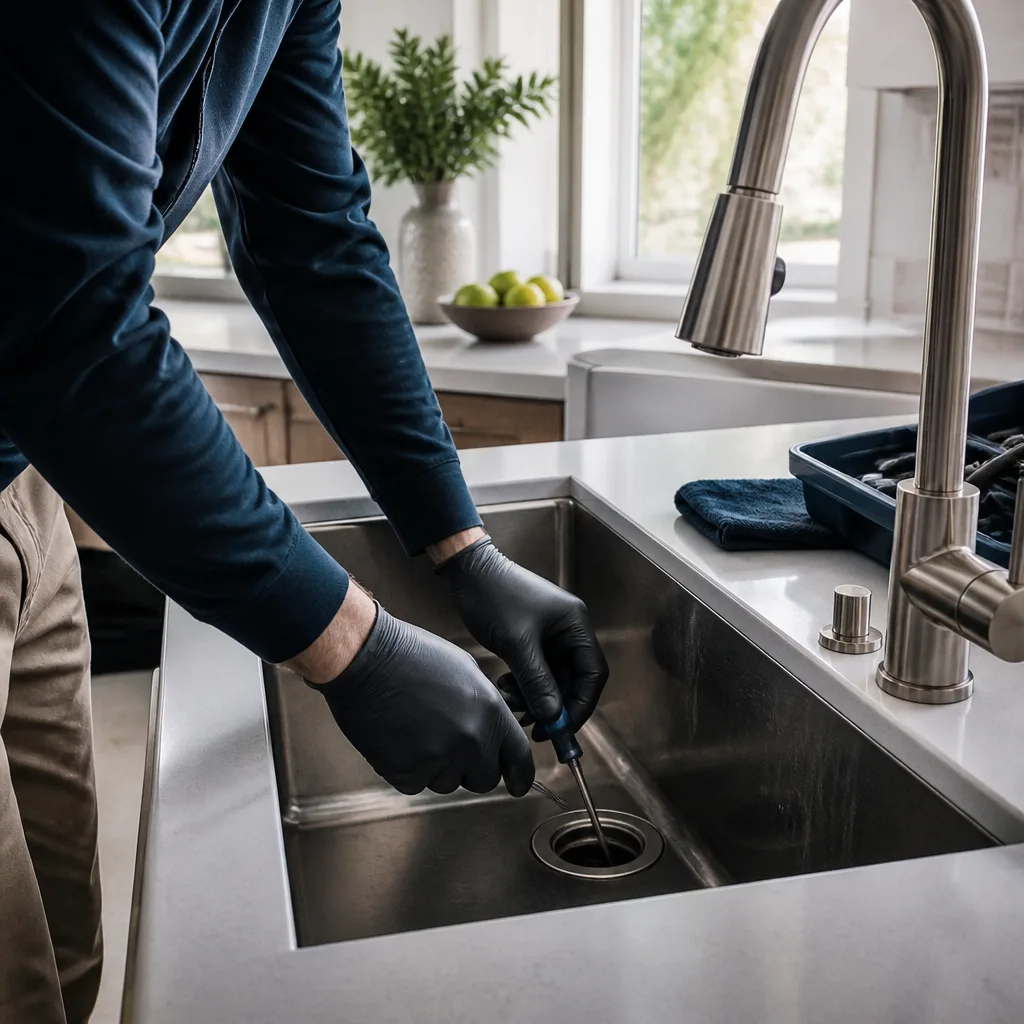
Stop adding food or grease and note whether one or both bowls are affected, whether the dishwasher is draining, and if nearby fixtures have changed. A slow sink does not reveal where a restriction sits.
Avoid chemical drain openers in a blocked line and do not repeatedly run water into a backed-up fixture. Share any product already used with the person assessing the drain.
Frequently asked questions
Related next steps
Kitchen drain cleaning in Ottawa · Why does my kitchen sink keep clogging? · Practical ways to reduce clogged drains
Back to the guide library